

FROM THE SECTION:
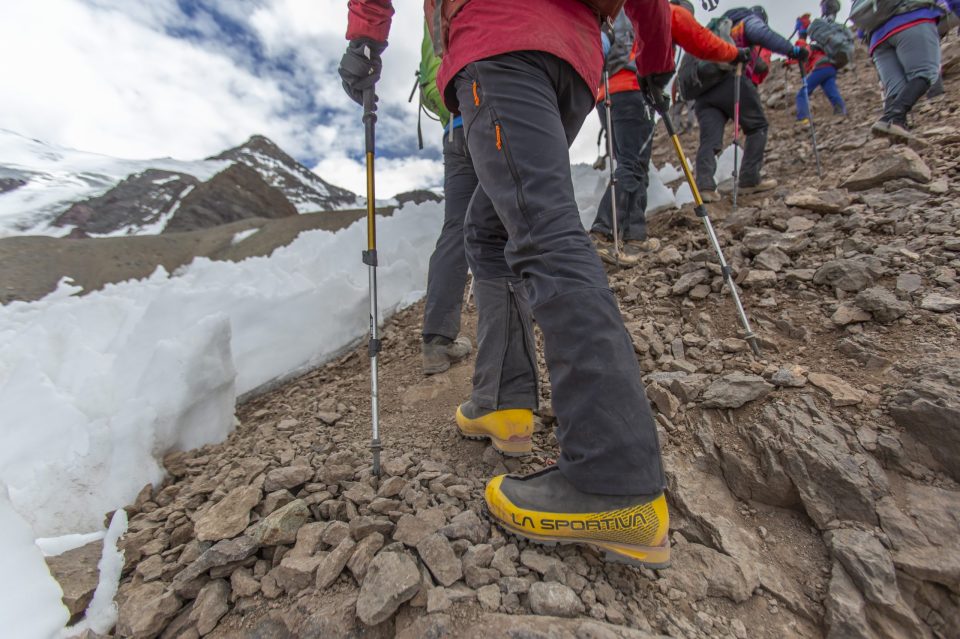
When it comes to facing the challenge of Aconcagua, footwear is not just an accessory — it’s a key tool for your safety, comfort, and performance. Choosing the right shoes can make the difference between enjoying the experience or suffering discomfort, injuries, and even an early descent.
On this mountain, where you’ll travel from rocky trails to icy glaciers, the terrain and weather conditions change drastically. That’s why it’s essential to have different types of footwear, each suited for a specific stage and function of the expedition.
Lightweight Trekking Boots
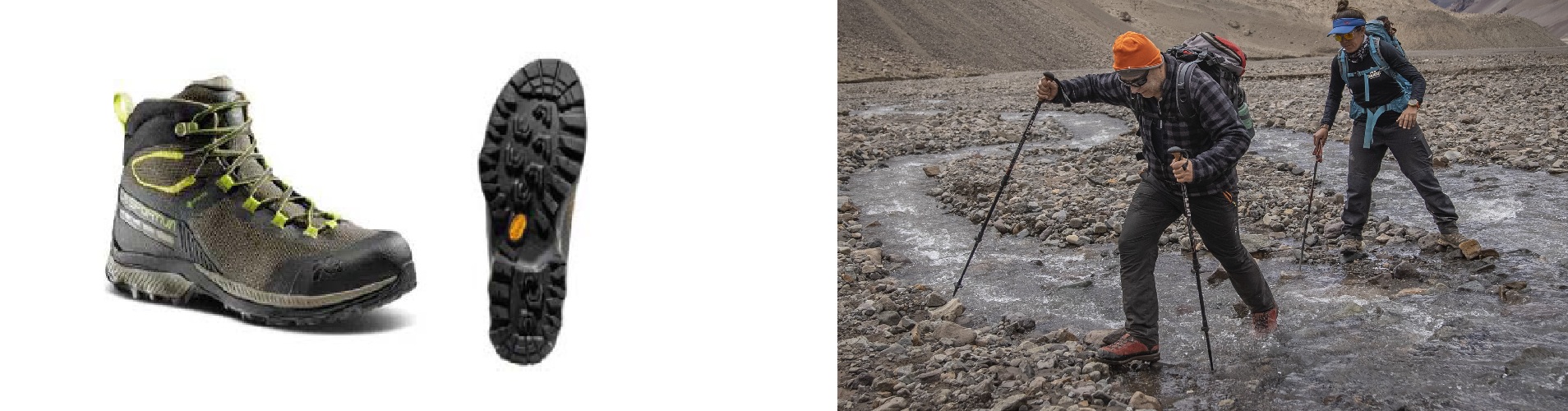
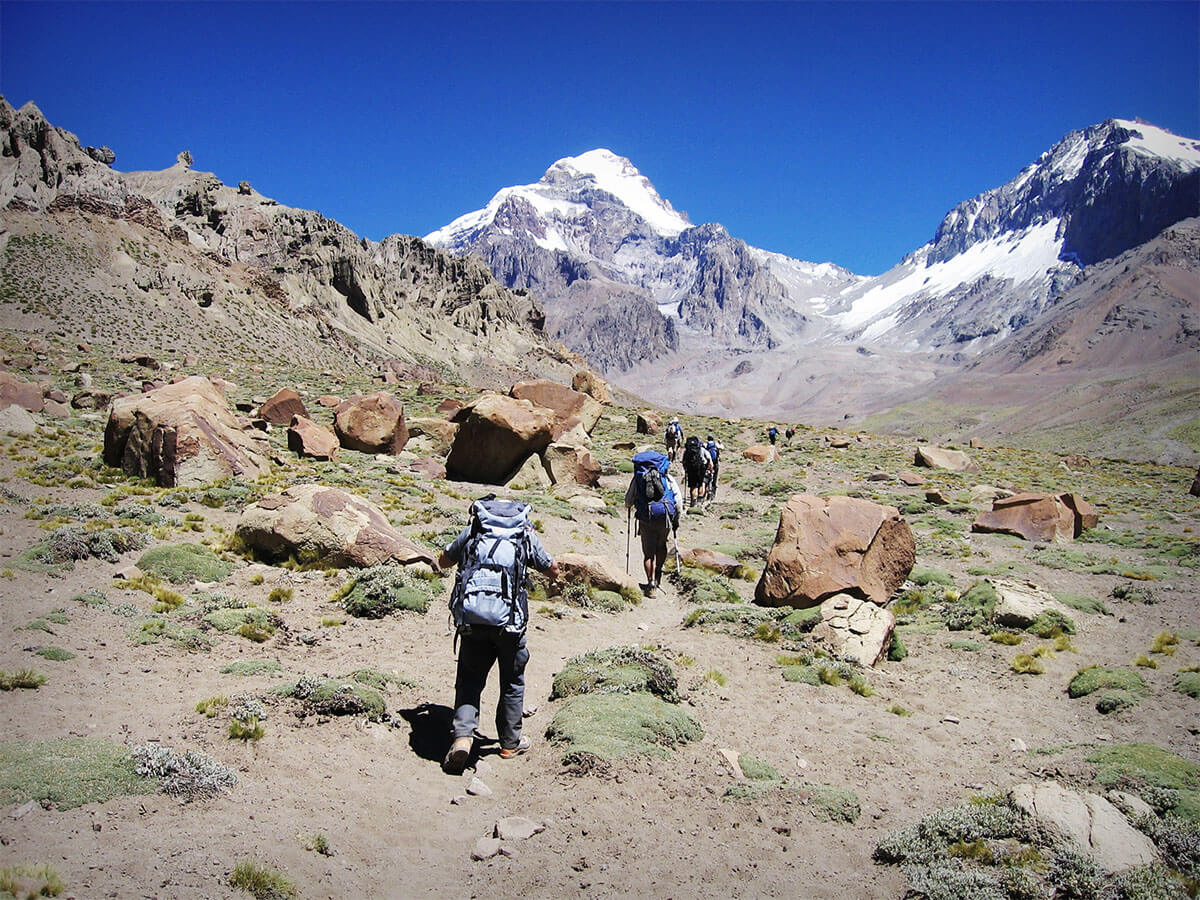
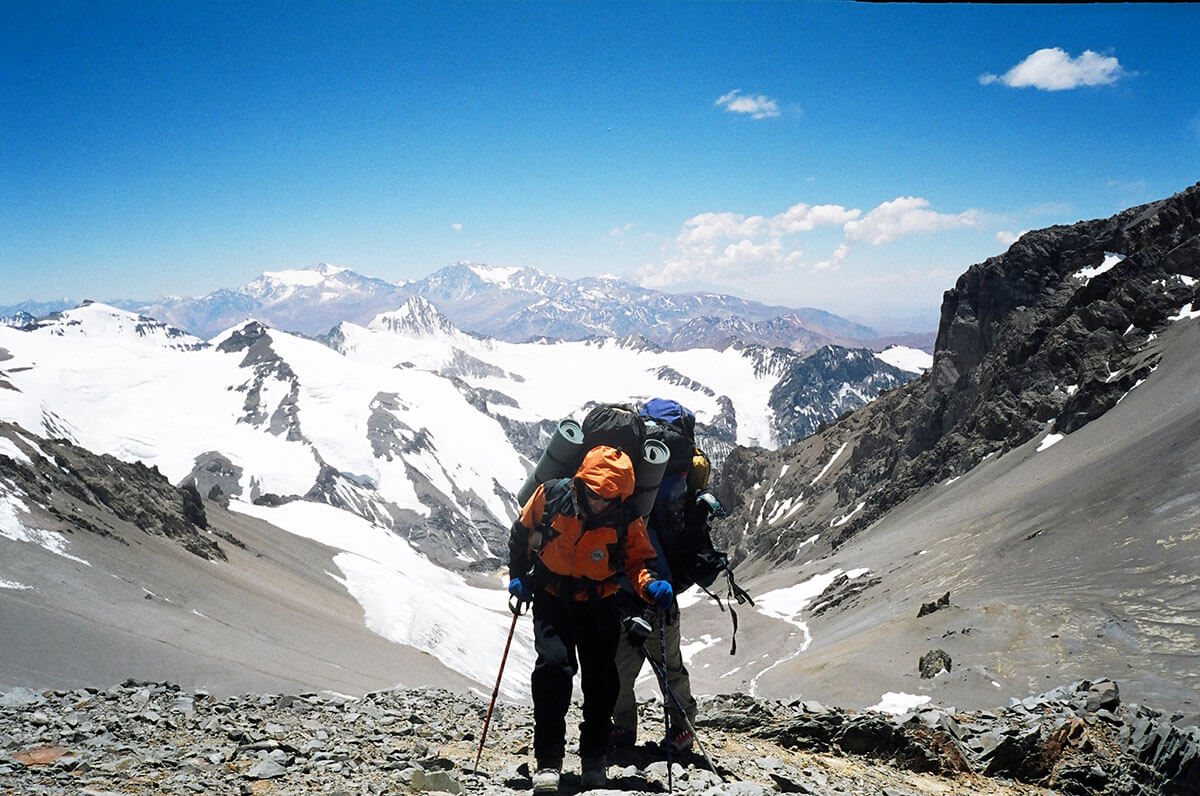
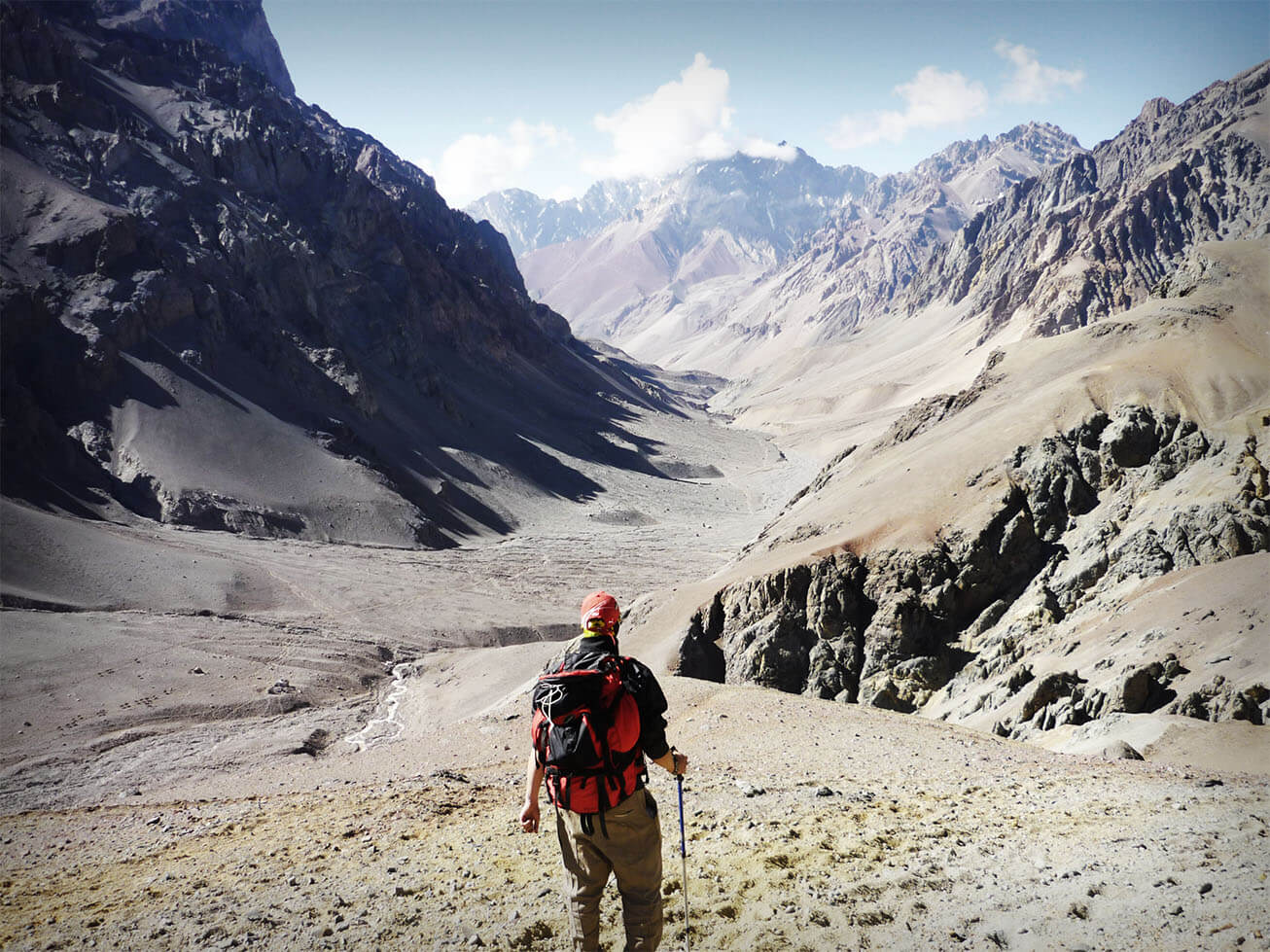
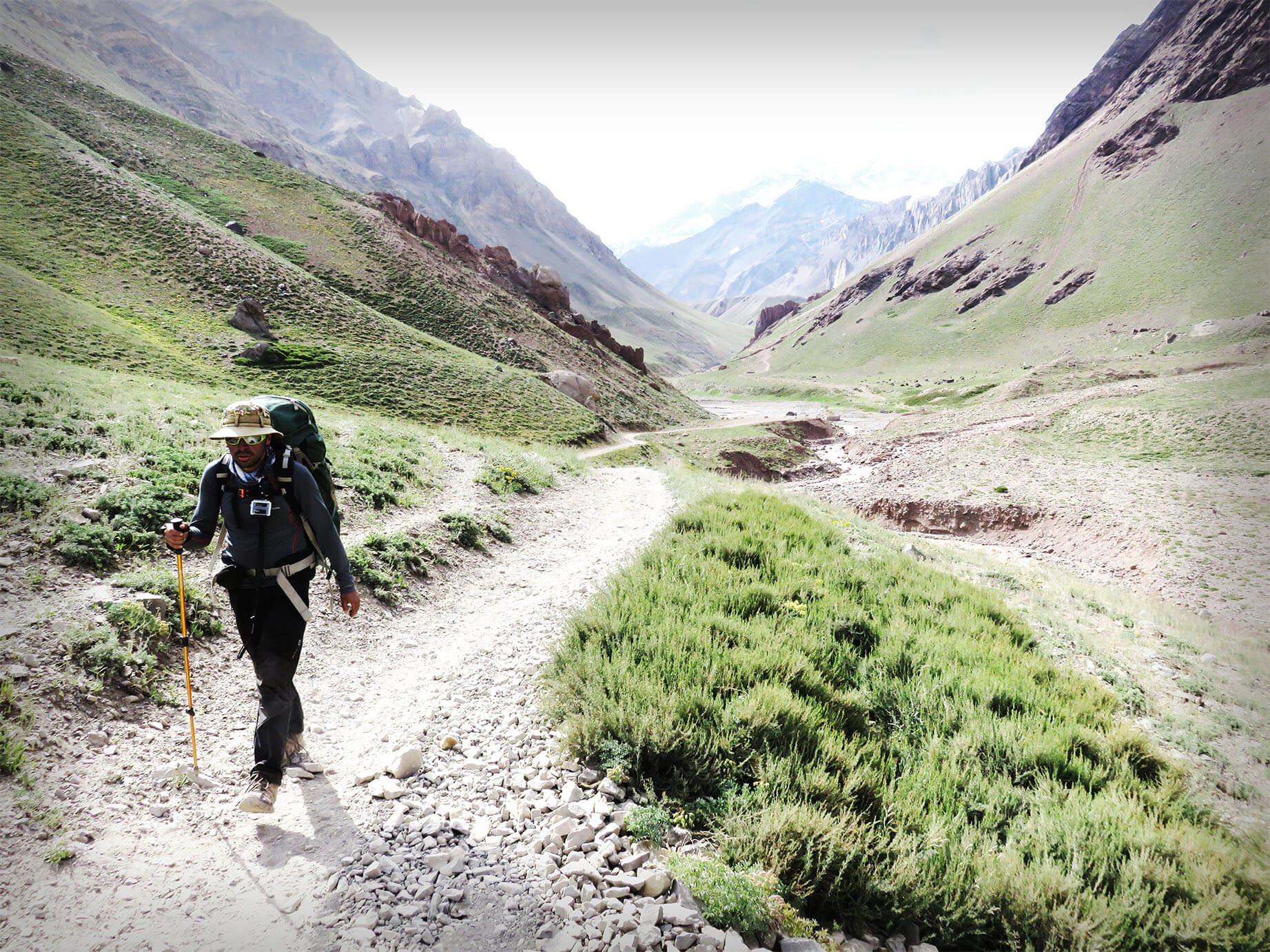
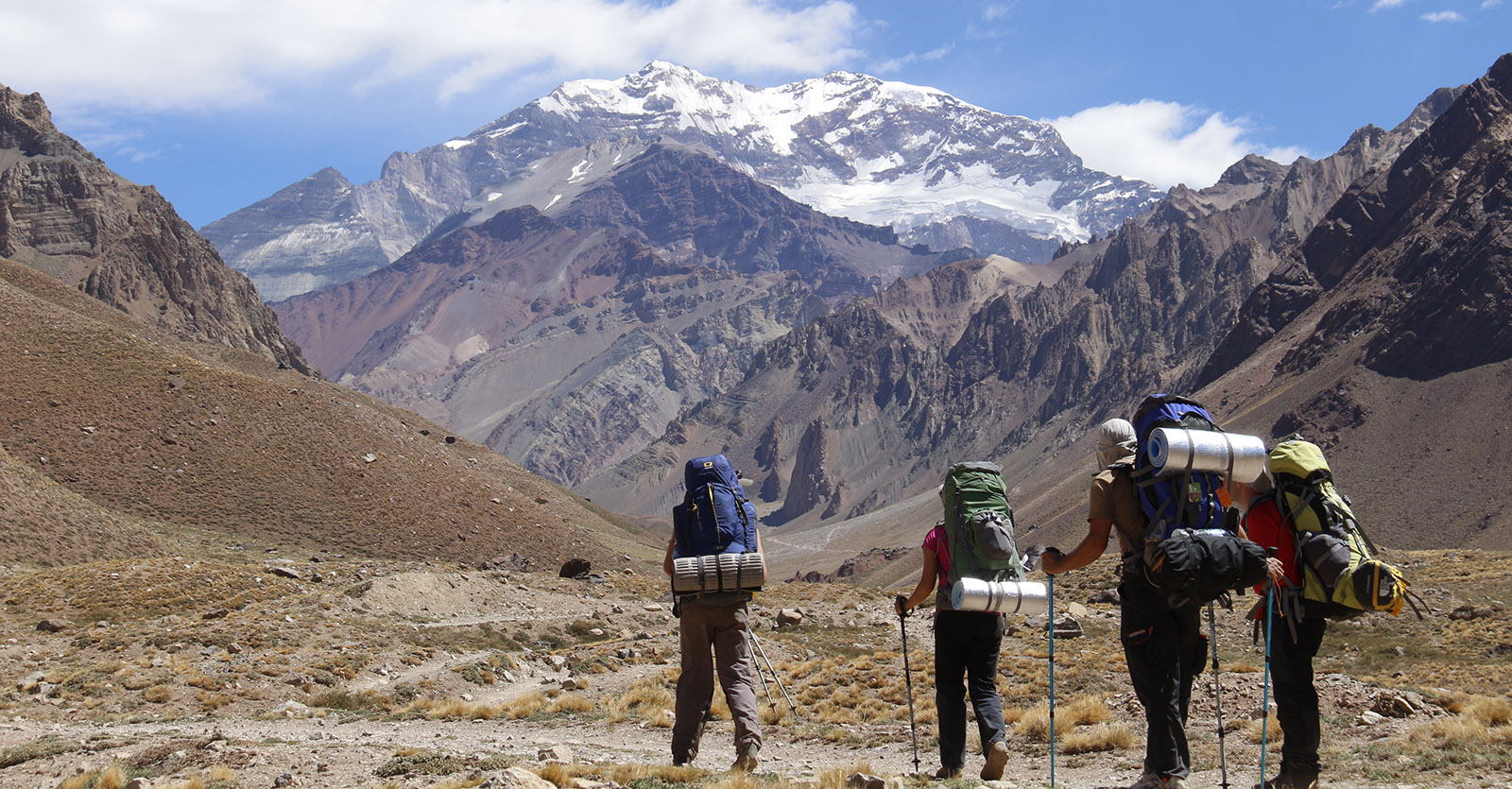
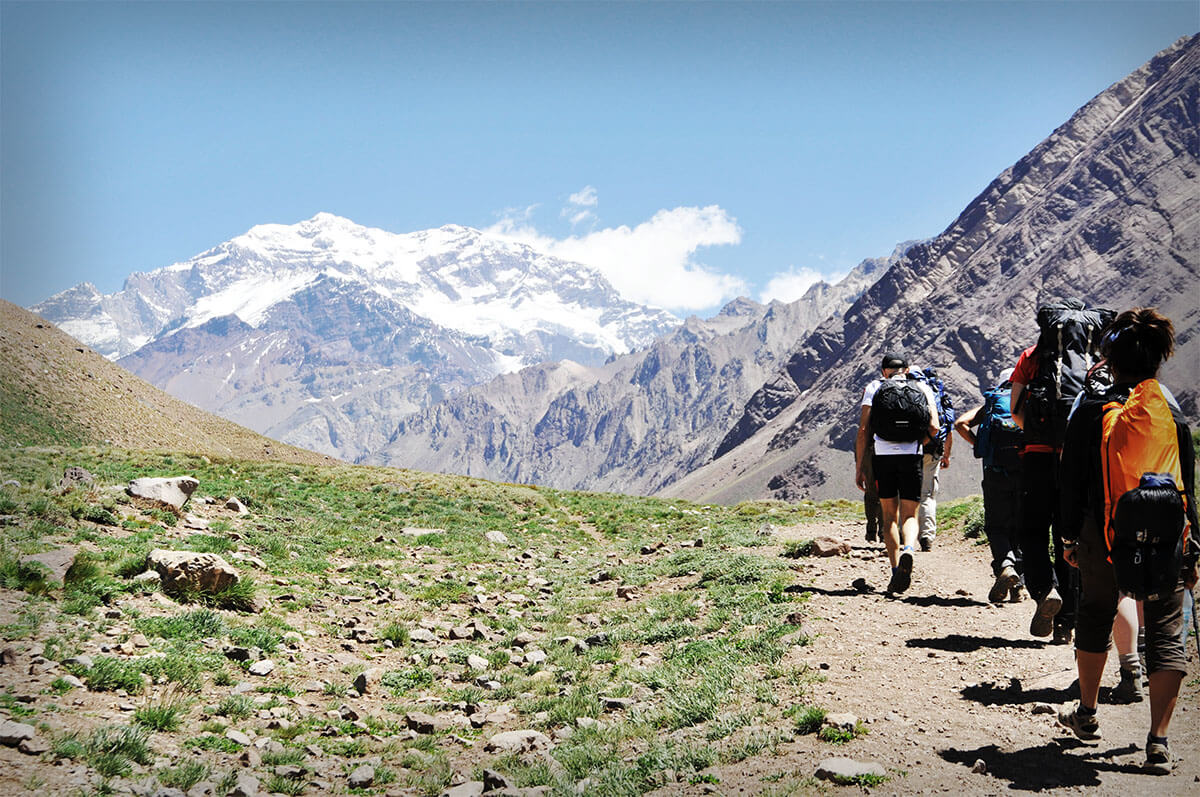
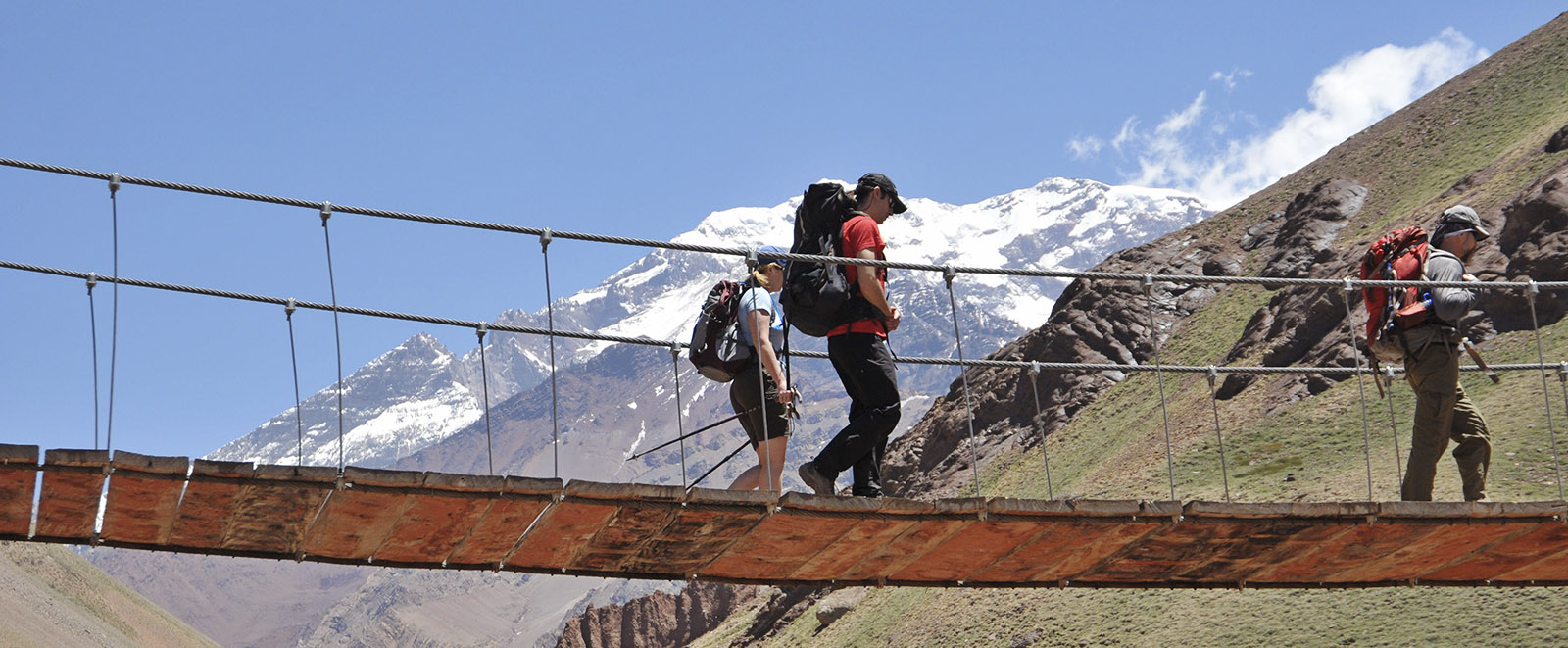
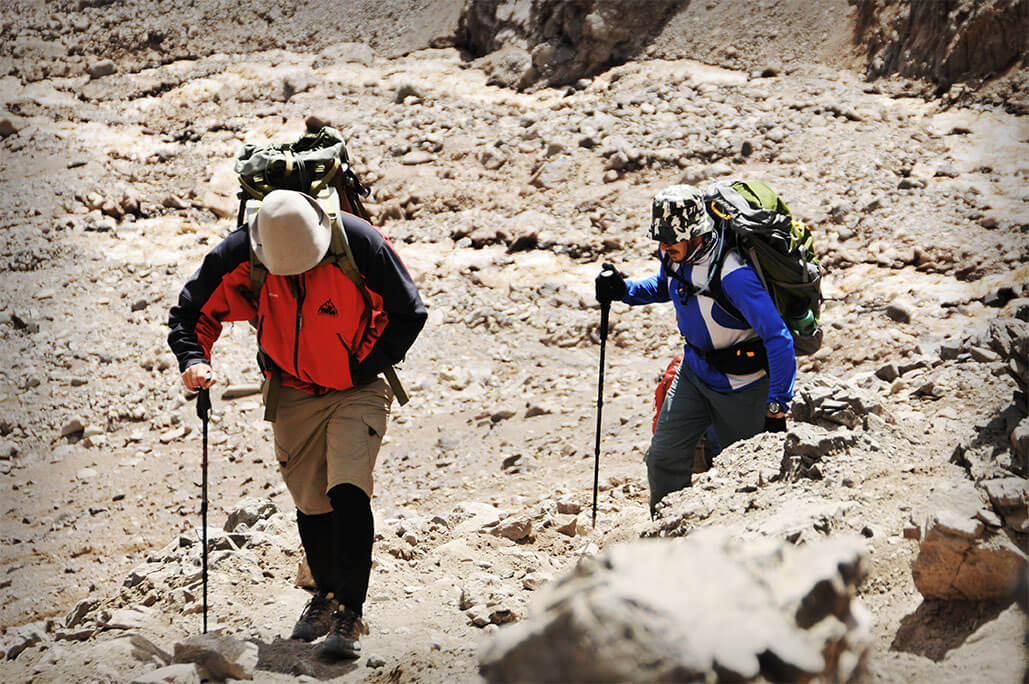
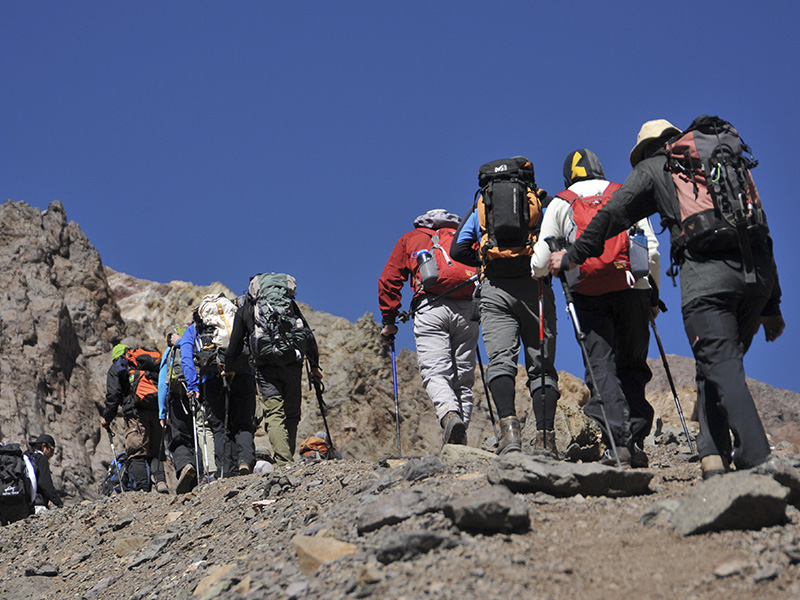
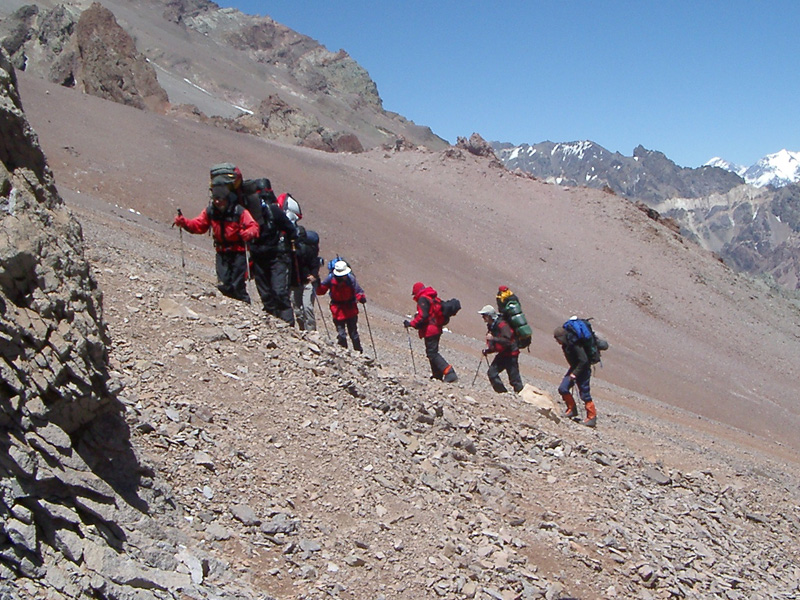
Ideal for the approach to base camps up to 4,300 m (14,100 ft), these boots should be comfortable and provide good ankle support to endure long days on rocky terrain.
The sole should have excellent grip (Vibram or similar) to perform well on wet, steep, and slippery surfaces. Waterproof material is essential to keep your feet dry, and the fit should allow toe movement, with enough room for one or two layers of socks.
A well-chosen pair will prevent premature fatigue and blisters, and will serve you well during demanding hiking days. Recommended brands: Scarpa, La Sportiva, Millet.
High-Altitude Boots
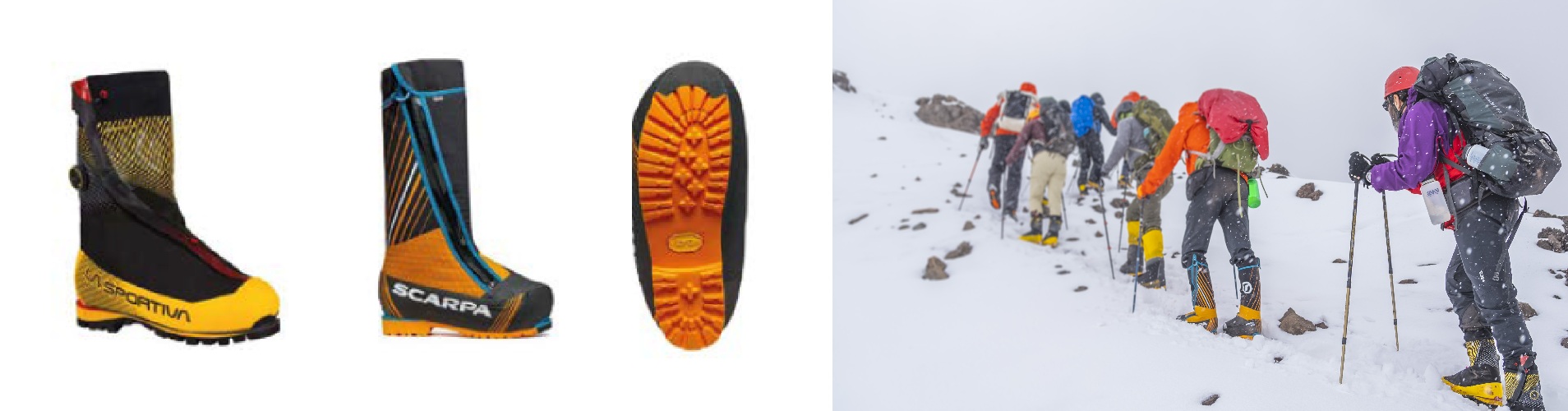
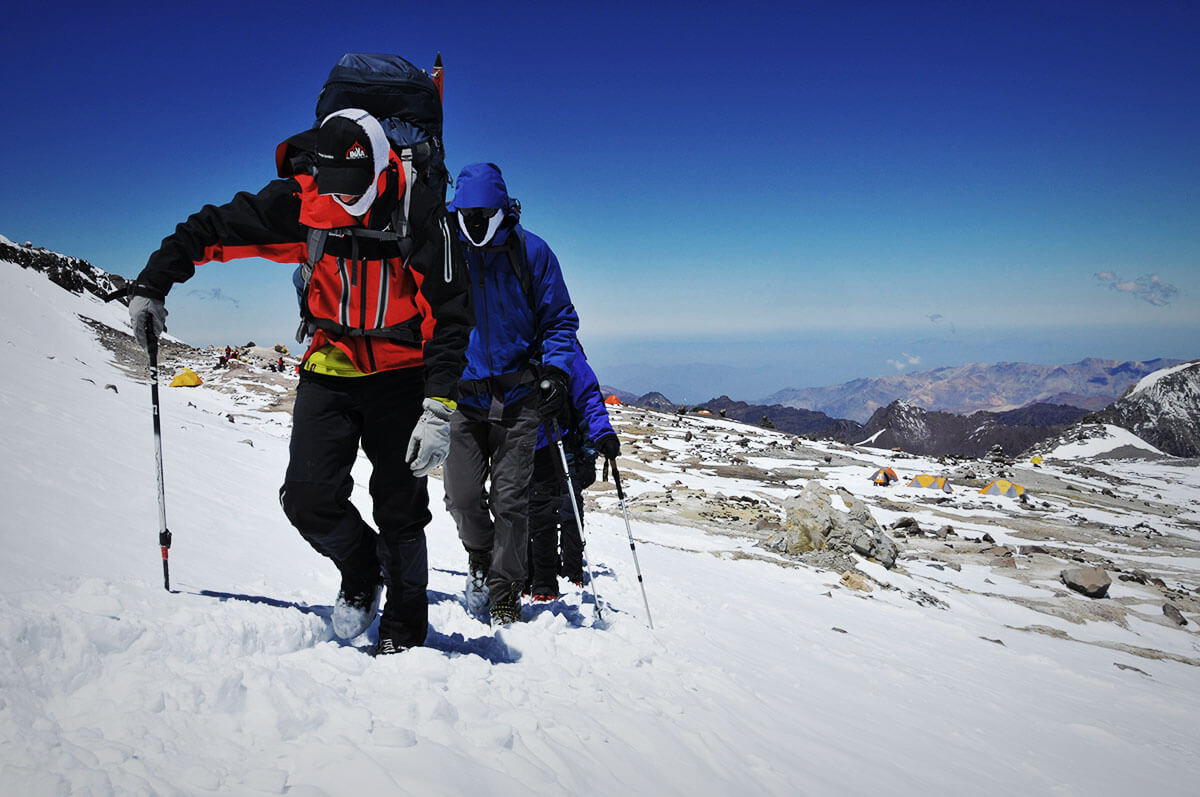
For stages above 6,000 m (19,685 ft) and extreme temperatures that can reach -30°C (-22°F) wind chill, you’ll need double or triple high-altitude boots.
These boots provide maximum thermal insulation, are waterproof, rigid, and compatible with crampons. The removable insulated inner boot makes it easier to dry them out in camp.
The sole, preferably Vibram or equivalent, must be in perfect condition. If you rent this type of footwear, carefully inspect the rubber and edges. They are not recommended for the approach trek, as their stiffness can be uncomfortable for long stretches without snow. Suggested models: Scarpa Phantom 8000, La Sportiva G2 Evo, La Sportiva Mons Cube, La Sportiva Spantik, Scarpa Inverno, Asolo AFS.
Gaiters (Optional)
If your boots don’t have integrated gaiters, it’s worth bringing a separate pair. They should be waterproof, made of Gore-Tex or abrasion-resistant fabric, and long enough to cover all layers of pants along with the boots. They are especially useful for keeping snow, mud, and water out of your footwear, improving both comfort and thermal protection.
Camp Shoes
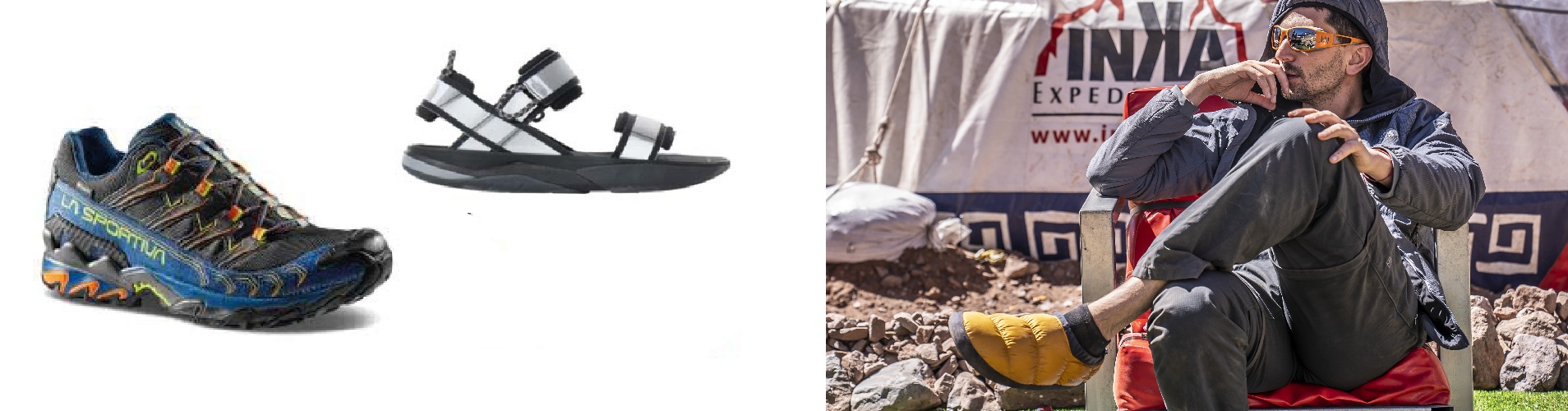
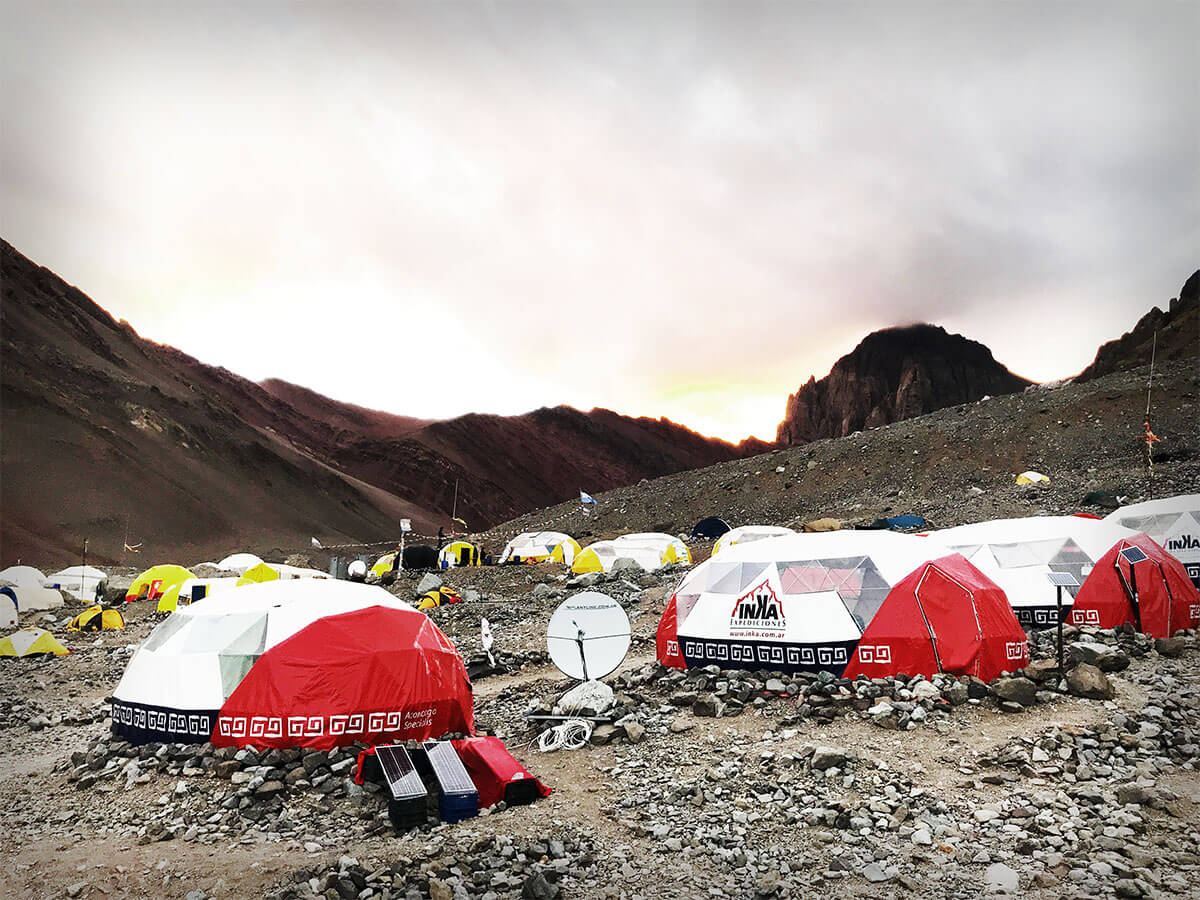
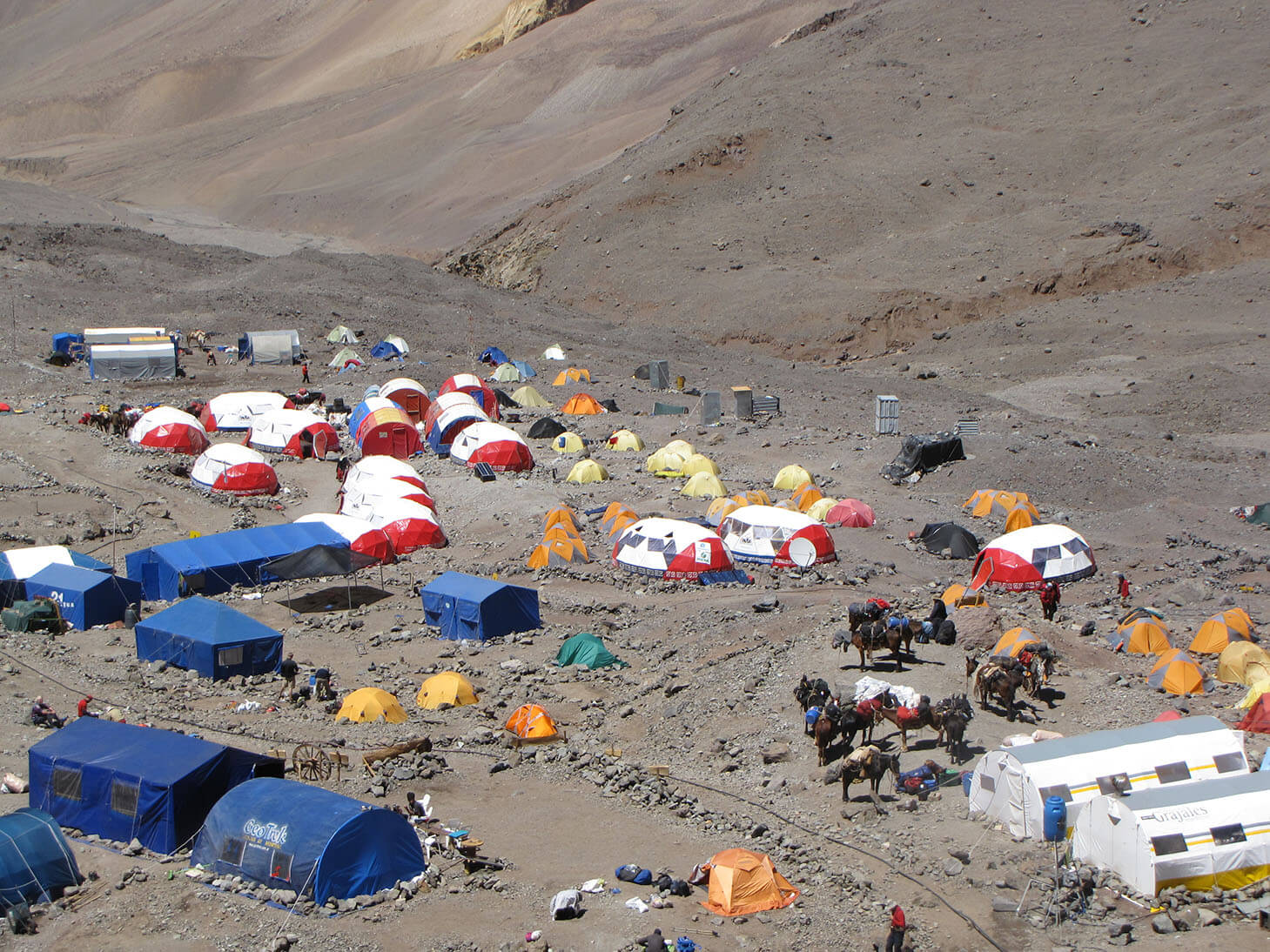
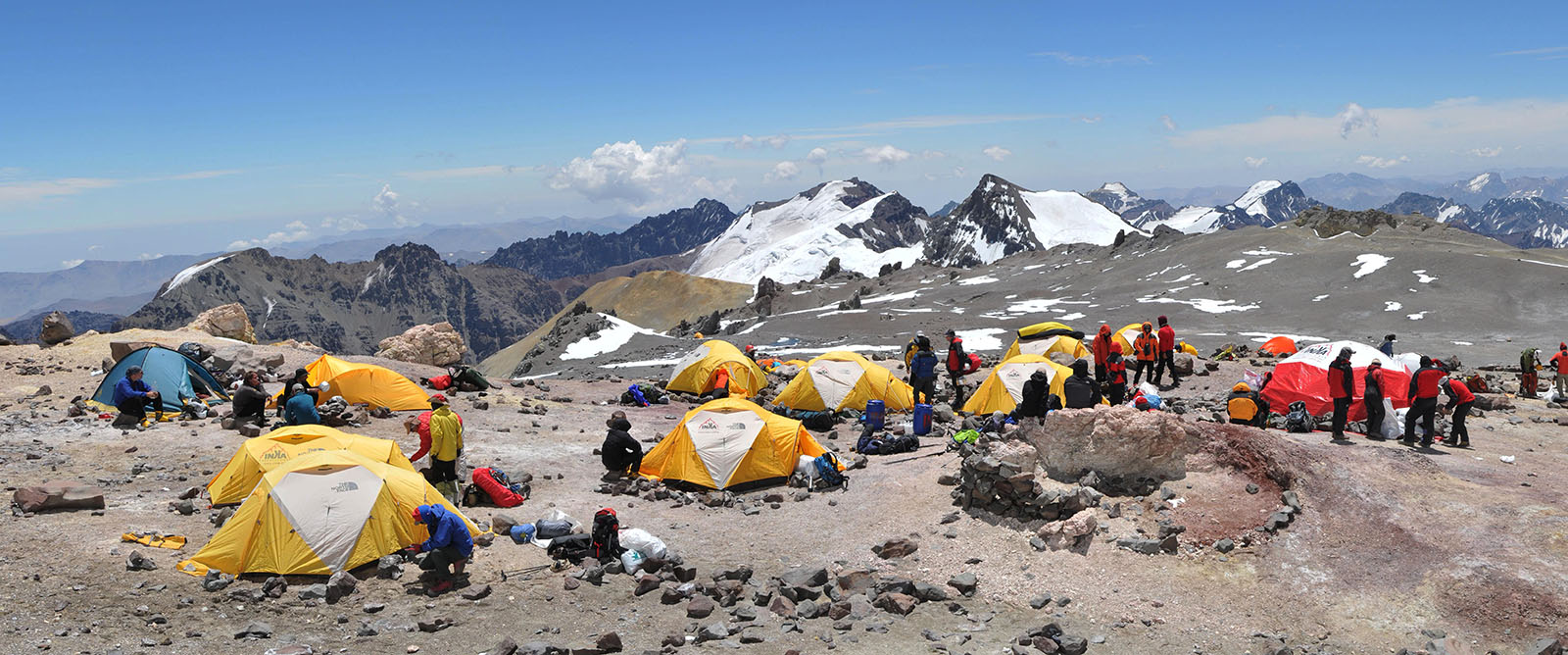
At base camp, after long hours of trekking, it’s essential to let your feet rest and recover. This is where camp shoes come in: comfortable, with soft insoles, allowing free toe movement and muscle relaxation.
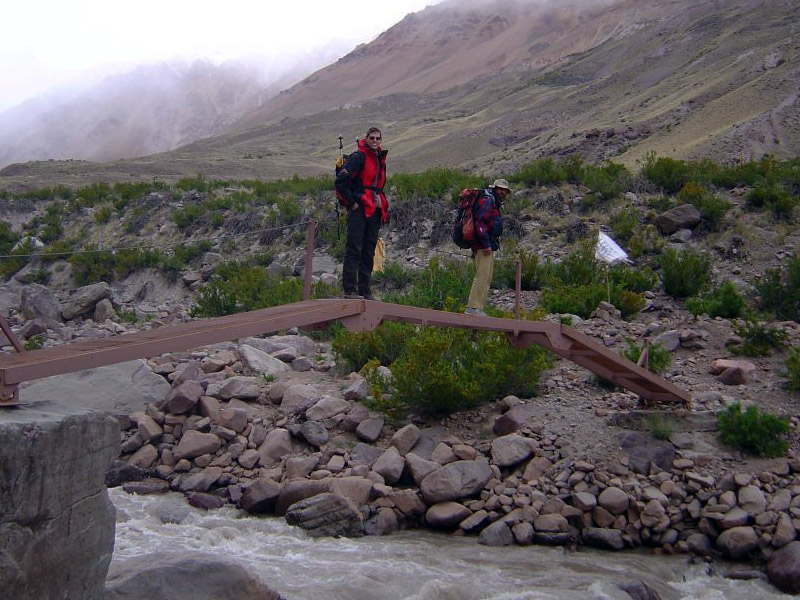
The sandals are not only useful for rest days, but also for crossing rivers or wet areas without soaking your main boots. Like camp shoes, they should allow ventilation and freedom of movement for your feet.